We get paid to tell jokes for an Enterprise SaaS
WhatsApp to a CMO, a messy June pilot, and why GrowthOG is betting the shop on immersive skits and humour — not another polished talking head.
“yo, how are your ads doing?”
That’s what I sent a CMO at an enterprise SaaS via a WhatsApp DM.
He replied, “Our ads are wrecked. Can you handle it?”
That was it. No long brief. No deck. Just that.
Tbf I’ve worked with them for 7 years (on SEO), but I was surprised how fast this deal took shape.
Today, we are three months into making video ads for this client, and what started out as a theory has now turned into practice. Basically, we get paid to tell jokes and create immersive skits for an enterprise brand that's doing $500,000 in monthly Meta spend.
In this article, I’m going to break down the first campaign we ran for them, the science behind why simple immersive skits and humour beat controls, and why I'm making that the foundation of my video agency.
Let’s get dandy.
First, before I get into what we did, I needed to figure out the “our ads were whack” bit.
I asked for access and, for the first time, got into their Motion app.
At the time, I didn't know what this was, but now I do know that this is the holy grail for all performance marketers and demand gen professionals alike.
To be fair, this was a client I worked with for 7 years, so there's already a lot of trust built. When I asked the CMO for access to the campaigns, I was glad that the CMO trusted me and gave me access.
When I looked at their ad portfolio, I saw a few things.
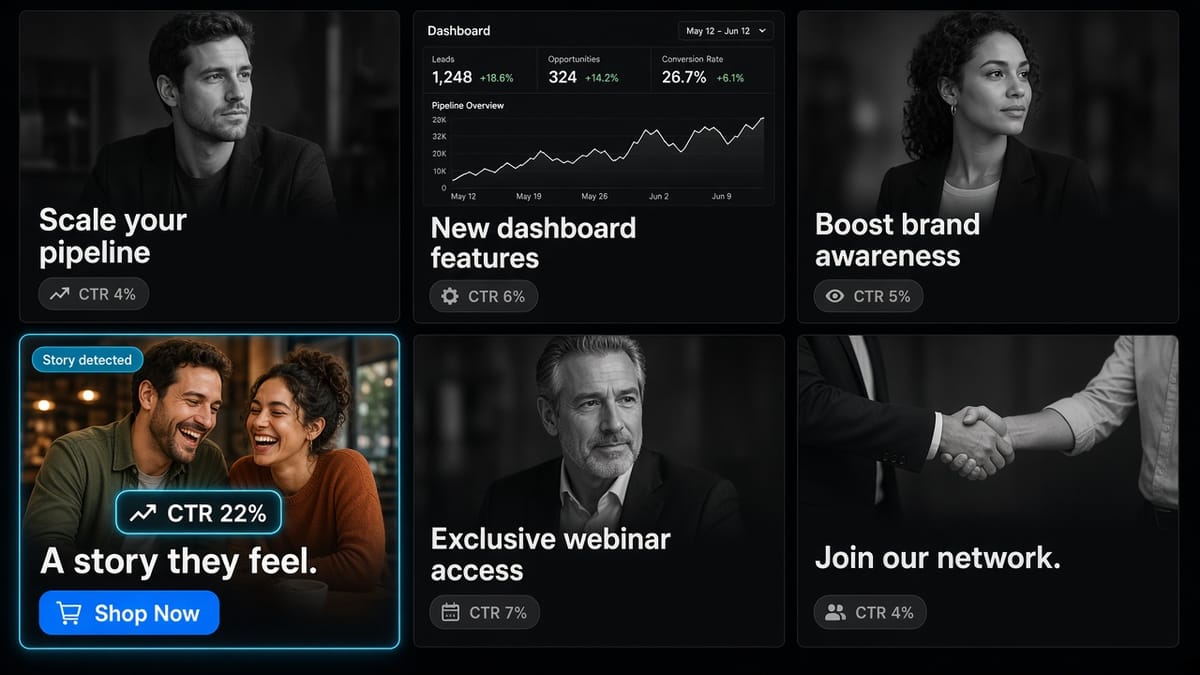
They were spending almost $200,000 every month on a subset of ads. A lot of them were talking-head ads and role plays shot very professionally.
But there was no script.
No acting.
No emotional connection.
If I were watching those ads, I would see that it was an ad and click away. The ads looked very good, shot in a production room. Perfect lighting, crisp quality, etc.
But they didn’t make me <em>feel</em> anything.
So, I went back to the drawing board.
I was thinking, “Hey, if I were to make ads for these guys, what would I do?”
The pitch: story ads about their audience
Pretty quickly, I realised story ads were the way to go.
Rewind a few months prior to pitching their CMO, and I was actually creating faceless videos. I had this plan to launch a faceless YouTube channel and was even developing custom software for it.
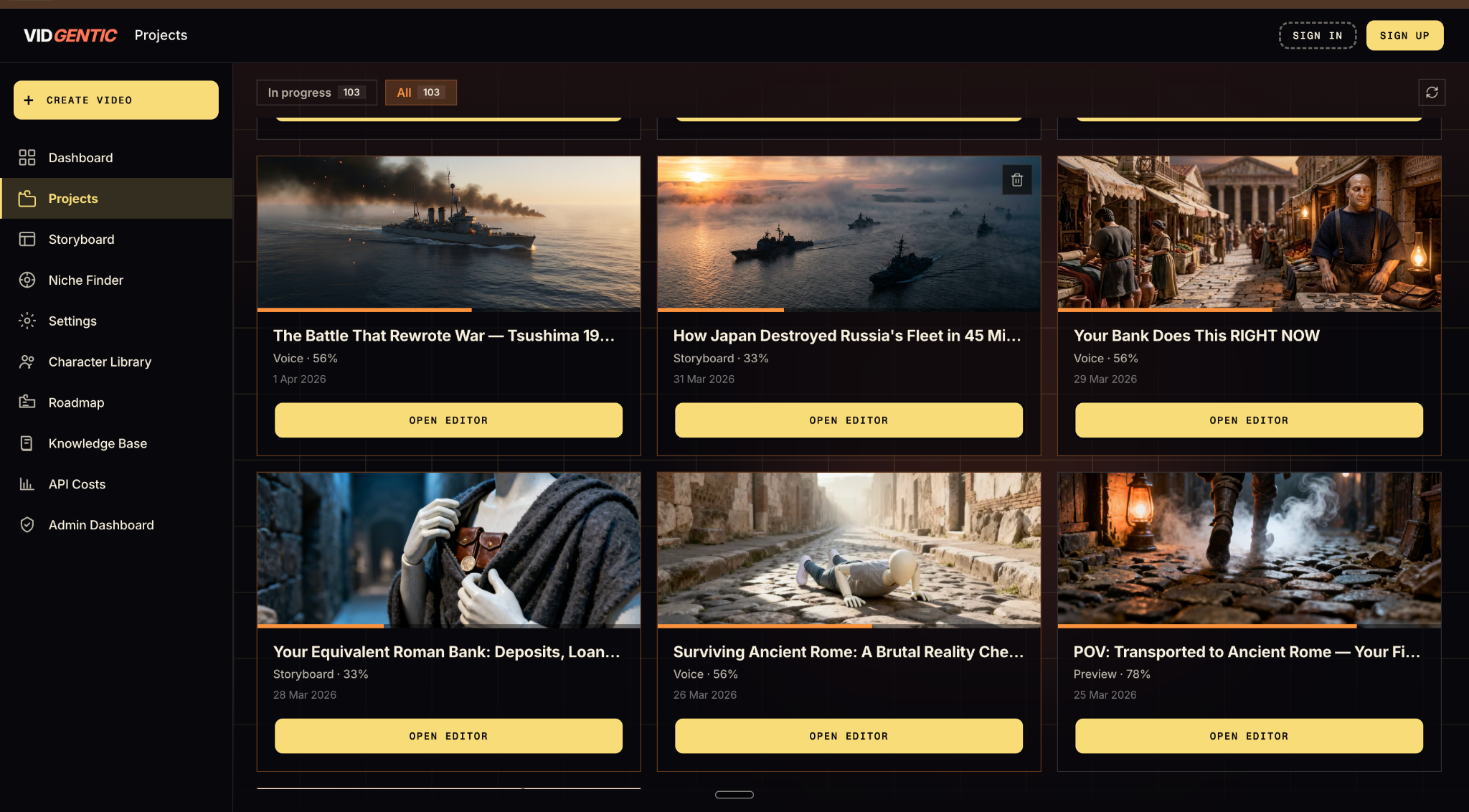
Before this, I produced nearly 50 videos covering children's bedtime tales, adult sleep narratives, real history, and fictional events. That grind taught me the real mechanics of storytelling. Truthfully, narrating a story has always come easily to me—it's second nature. So turning to this medium for our client felt completely natural.
More specifically, I wanted to make story ads by using their target audience around the story. I wanted to use humour and thriller elements, and overall, have a call to emotion in every video I make for them.
Not another polished talking head.
Not another role play that looks expensive and feels empty.
A story. About the people they sell to.
I pitched that to them.
And the CMO is amazing.
He agreed to do it.
When I asked him, “Hey, what do you think about it?” he said, “In this market, if you don’t try, you don’t know.”
That line stuck with me.
I pitched it to the media buyer, the demand generation director, who gave me the signal to say, “Hey, look, your theory makes sense. Let’s try it out.”
And so we did.
The debut and the 3,250 payout
We made our first debut in June. We landed the pilot to do three ads at $1,625 each.
The deal was simple: we would have a base of $625 per ad, plus a $1,000 performance bonus if the ads hit KPIs.
To be honest, I totally underestimated how tricky the production process would be. I started working with external vendors who would help us with post-production, including editing and grading, and internally focused on the script.
Boy, was I wrong. It was gruesome, took 3 weeks, and tested our relationships with this client. We worked with their demand gen team, and they were quite new to us, so let's just say we didn't make a good first impression.
Dory and I, the co-founders of GrowthOG, are veteran entrepreneurs, and we've been there, done that many times. We've gone through one exit.
Although this was a very messy process, I think both of us individually showed up in different parts of it and learned how to make it work. We basically rolled up our sleeves and got it done. I'm actually very proud of both of us because we not only delivered but hit most of the KPIs.
We ended up getting a payout of $3,250. And boy was I thrilled!
Story ads are now the whole bet
Today, we are month three into our engagement.
We are running our second pilot, still not out of the waters.
This time around, the processes are a lot simpler and less complicated. There's less strain on the clients, partly because Dory and I have both agreed that we will not work with external vendors and will handle the entire process ourselves. We're not going to outsource, and we're not going to hire new members until we know for sure.
It's very important that you do the process yourself, especially with video. I think today we are lucky to be very empowered to handle multiple parts of the process, and we rely on super intelligence for parts we aren't as good at.
What started as three story ads we theorised has become the whole bet.
If you really think about it, my playbook is super simple:
- Use a setting that's recognisable to your audience.
- Use the actual audience as a character so they can relate to them.
- Use the product to show them the outcome in that scenario.
That's it: no magic, just a video that tells a good story.
Stories are all we’ve ever known.
Long before spreadsheets, ROI calculators, or G2 reviews, the brain learned from stories — who to trust, what kills you, what to do next.
That same wiring is why a skit can land when a feature list gets skipped.
A few proofs, and why they matter for the ads I’m making:
Evolution. For tens of thousands of years, people who listened to stories about water and poison lived. A story ad doesn’t invent a new pathway. It uses the old one. Your buyer already knows how to follow a setup, a conflict, and a punchline. They don’t know how to care about your seventh product bullet.
The Bible and every lasting history. The longest-running texts on earth are almost entirely stories and parables — short scenes that carry a lesson. Skits are that format in a feed. You’re not dumbing the product down. You’re putting the lesson in the shape humans keep.
Childhood. Fairy tales and fables beat logic lectures as first language. Same with cold scroll: if the first three seconds feel like a lecture, they bounce. If they feel like a scene they recognize, they stay.
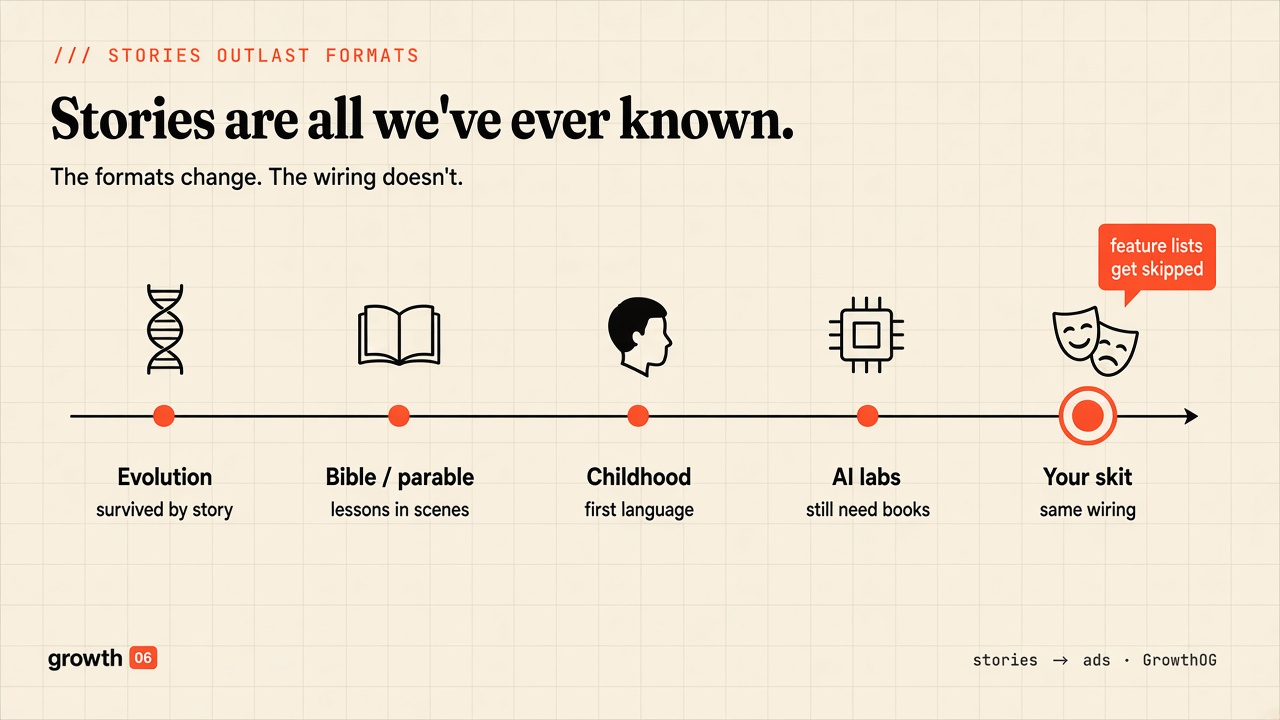
And here’s the kicker: even AI labs can’t escape story as the core training material.
OpenAI deleted datasets of books after copyright discovery about what those sets contained. Separately, court filings around Anthropic described destructive scanning of physical books for training data — spines cut, pages scanned, originals discarded. The machines still needed the stories. Your ads do too.
Which brings up the obvious question: why humour in a story?
What your buyer is carrying into the scroll
You know the saying: if you have to explain a joke, it loses its value. That's pretty much how I feel about over-explaining humour.
In today’s world, there's a lot of stress, depression, and burnout in the day-to-day experience of your business buyer.
You just have to think about this before your buyer watches your video:
- How is their day going?
- How are they feeling at that moment?
- What were they watching or doing before that?
- How is AI affecting that?
There are so many factors that can really affect their decision, and I'm not saying that you need to be a psychic. I'm just saying you need to be aware of that.
One simple remedy for this can be humour. A good laugh or a good joke, when delivered right, can just lighten the mood and turn a stressful event into an unstressful one.
And, that's what you can do with your video.
On a simple spectrum of emotions, humour sits on the light side. We use humour because laughter makes the moment less heavy. It makes you forget that you have problems, even if it's just for a bit. Your job, especially with ads, is to be that rare moment in their day that gives them joy.
The more often you do that, the more often they're going to associate you with that positive event. That's how you create a memory, and that's how you create an association with your brand. It's not that complicated.
Tell good jokes = positive association.
I watched this very interesting video by an unexpected teacher, a comedian called Barry. His YouTube channel Barry’s Economics laid down three very interesting concepts that have stuck with me and will probably stick with me for quite a long time.
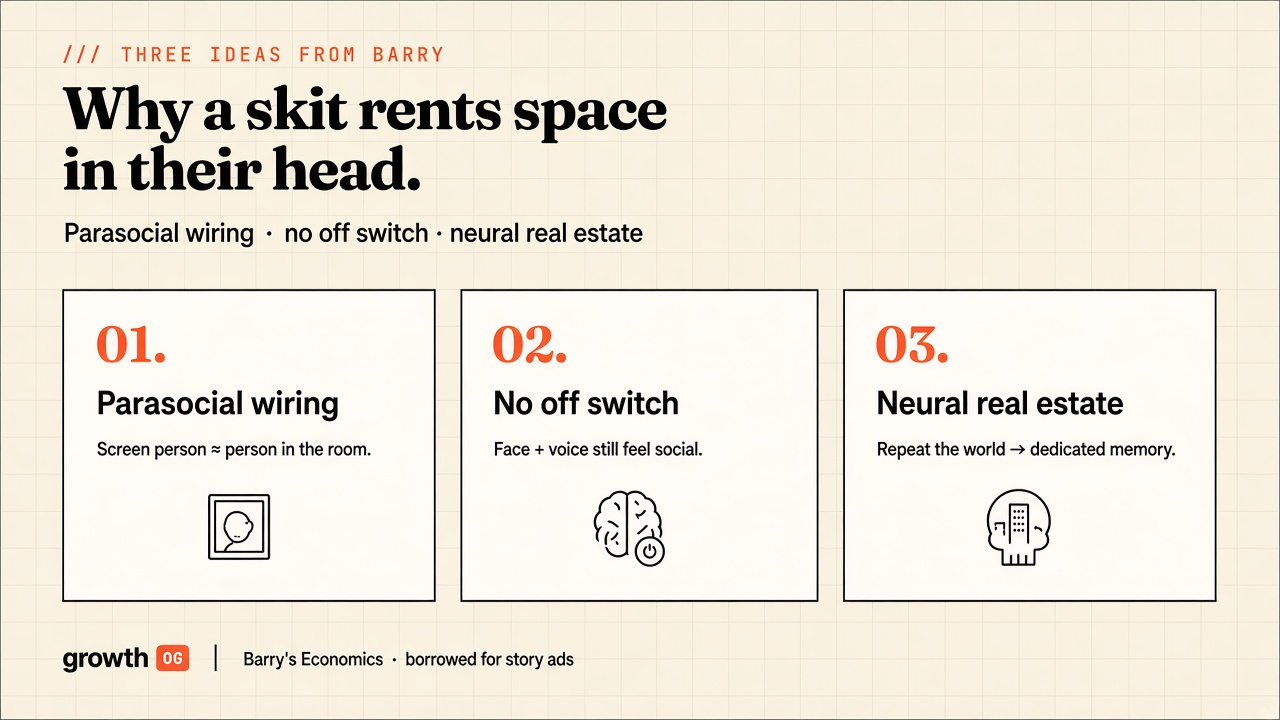
1. Parasocial wiring Horton & Wohl (1956): your brain treats a person on a screen a lot like a person in the room. One-sided “I kind of know them.” So a skit with a familiar buyer-type can land harder than a sterile product pitch.
2. No off switch Reeves & Nass (media equation): screens are new; the brain’s old software still runs. Face + voice = social, even when it’s an ad. Your amygdala doesn’t care that it’s Meta.
3. Neural real estate (the Jennifer Aniston neuron) Quiroga et al., Nature 2005: a single neuron fired to different pictures of Jennifer Aniston — and basically nothing else. Repeated exposure can give a person or concept dedicated memory cells.
I’m not saying your SaaS becomes Friends overnight.
I’m saying: same recognisable buyer world + humour, repeated, rents a tiny office in their skull. The brand that pays rent beats polish that gets skipped.
Buyers are still buyers
Whether the budget sits under B2B or B2C, the person in the scroll is still a human.
Same stress. Same hunger for a story that feels like their world. Same wiring that learned from parables long before it learned from dashboards.
I’m not writing this as a universal playbook.
I’m saying this is the lane I’m putting GrowthOG on: immersive skits, humour where it fits, story ads that rent a little space in someone’s head. Instead of another polished talking head that gets skipped, I'm going to try to make my ads memorable so that, no matter what, whether it's a buyer who clicks the buy button or you, they're both satisfied with the humour and the story in it.
If your ads look expensive and feel empty, try the opposite bet. Tell a joke the buyer recognises. Put them in the scene. Let the product show up as the outcome.
Cheers